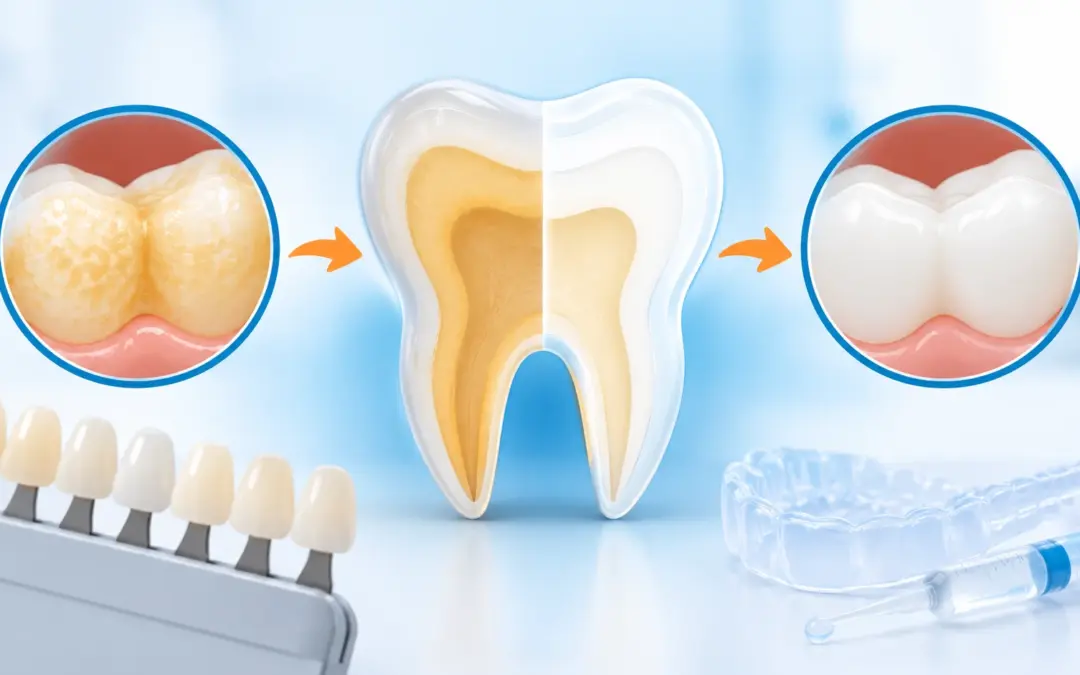
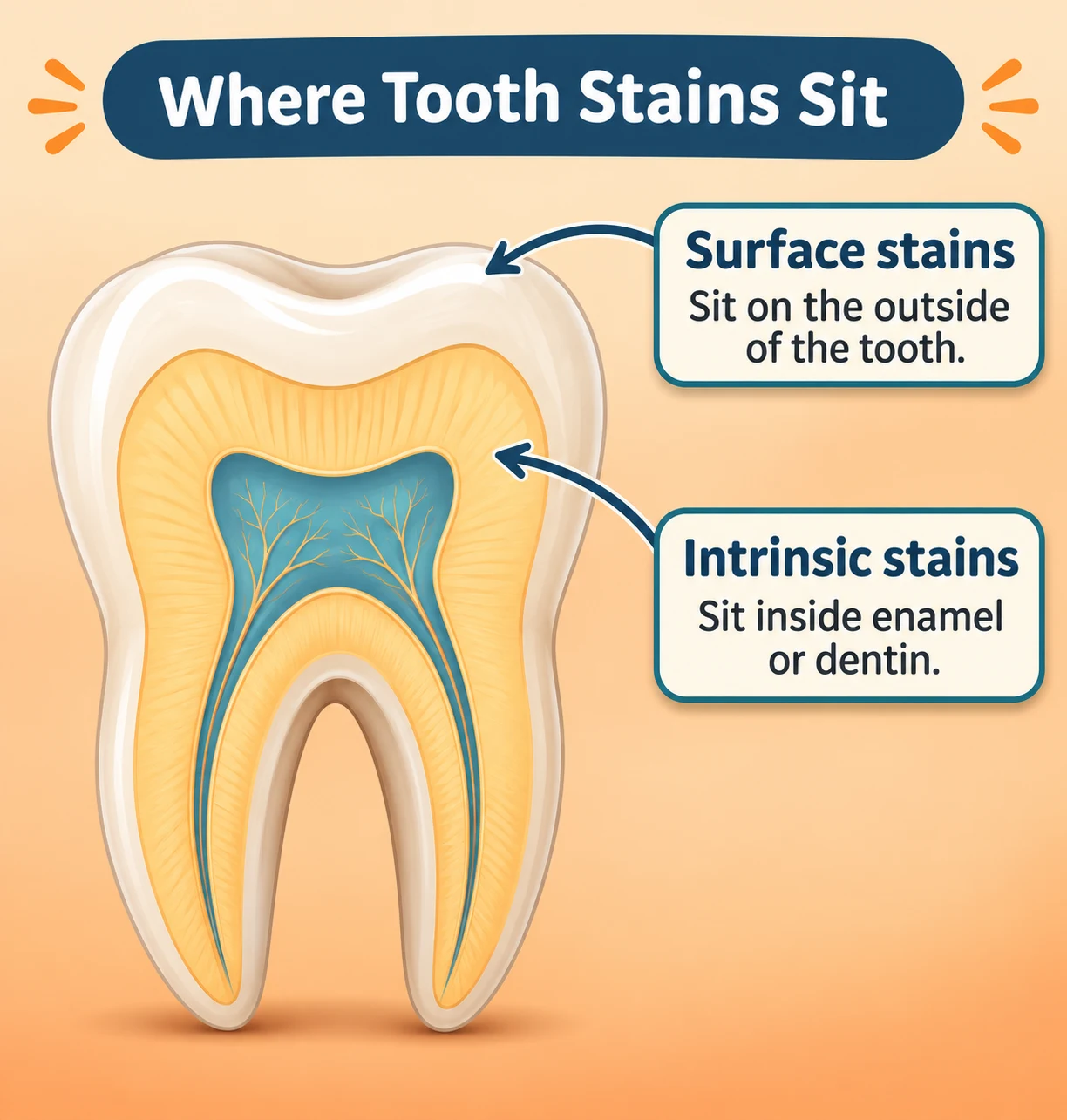
A whitening gel can lighten intrinsic tooth stains to a degree, but it rarely removes them. Here the pigment is part of the tooth. It’s held in the enamel or the dentin underneath, which means the gel has to soak its way in from outside. Cause and depth decide the outcome. So teeth whitening for intrinsic stains can make a clear difference for one person and almost none for the next. Hard to tell which is which by eye.
According to Dr. Uttkarsh Shah at The Smile Connect, a Dental Clinic In Kandivali, Mumbai, “Whitening gels lift pigment they can reach. Surface stains give way easily, but color built into the tooth during development moves slowly, if at all. The cause of the stain decides how much change is realistic.”
Why Do Teeth Develop Intrinsic Yellow Stains?
Intrinsic yellow stains form inside the tooth, which is why brushing and cleaning don’t touch them. Not a hygiene problem. Four causes cover most cases.
- Aging enamel: Enamel wears down over the decades. Dentin underneath is naturally yellowish, and as the layer above it gets thinner, more of that color comes through.
- Medication exposure: Tetracycline antibiotics are the classic example. Taken while teeth are still forming, they can leave grey, brown, or yellow bands deep in the dentin.
- Early fluoride excess: Too much fluoride in early childhood, while enamel is still forming, causes dental fluorosis. Mild cases show faint white lines or patches, and stronger ones show brown marks.
- Injury or nerve damage: A hard blow to the tooth, or a pulp that has died, lets blood pigments seep into the dentin. The tooth slowly turns grey or dark. Root canal-treated teeth sometimes go the same way.
Once the cause is clear, it’s easier to judge whether professional teeth whitening is worth trying first.
Will Whitening Work on Deep Stained Teeth?
Sometimes. A polish or one whitening round clears most surface stains. Deeper ones are less predictable, and that’s where results start to vary.
Stain type | Common cause | Typical response to whitening |
Extrinsic (surface) | Tea, coffee, tobacco | Usually lifts well |
Age-related yellowing | Thinning enamel, darker dentin | Moderate lightening |
Dental fluorosis | Excess fluoride in childhood | Varies, mild cases respond more |
Tetracycline staining | Antibiotics during tooth formation | Slow and often partial |
Tooth gone grey after a root canal | Pulp breakdown or leftover sealer | Internal bleaching often helps |
- How the gel works: Peroxide breaks pigment molecules into smaller, paler pieces. It doesn’t stop at the enamel either, because it can pass through to the dentin.
- Realistic results: Expect a modest change in shade rather than a transformation. Oddly enough, a home kit that stalls halfway is often the first hint that a stain is intrinsic.
- Treatment length: Deep stains can take several weeks, occasionally a few months, of supervised sessions. But more time doesn’t promise a perfect match.
- Sensitivity and restorations: Sensitivity tends to build with longer exposure. Crowns and fillings don’t lighten at all, so once the natural teeth brighten, those can stand out as darker.
How long the lightening holds is covered in this related read on whitening results.
Is your tooth discoloration sitting on the surface, or has it set in deeper?
What Else Can Be Done When Whitening Doesn’t Work?
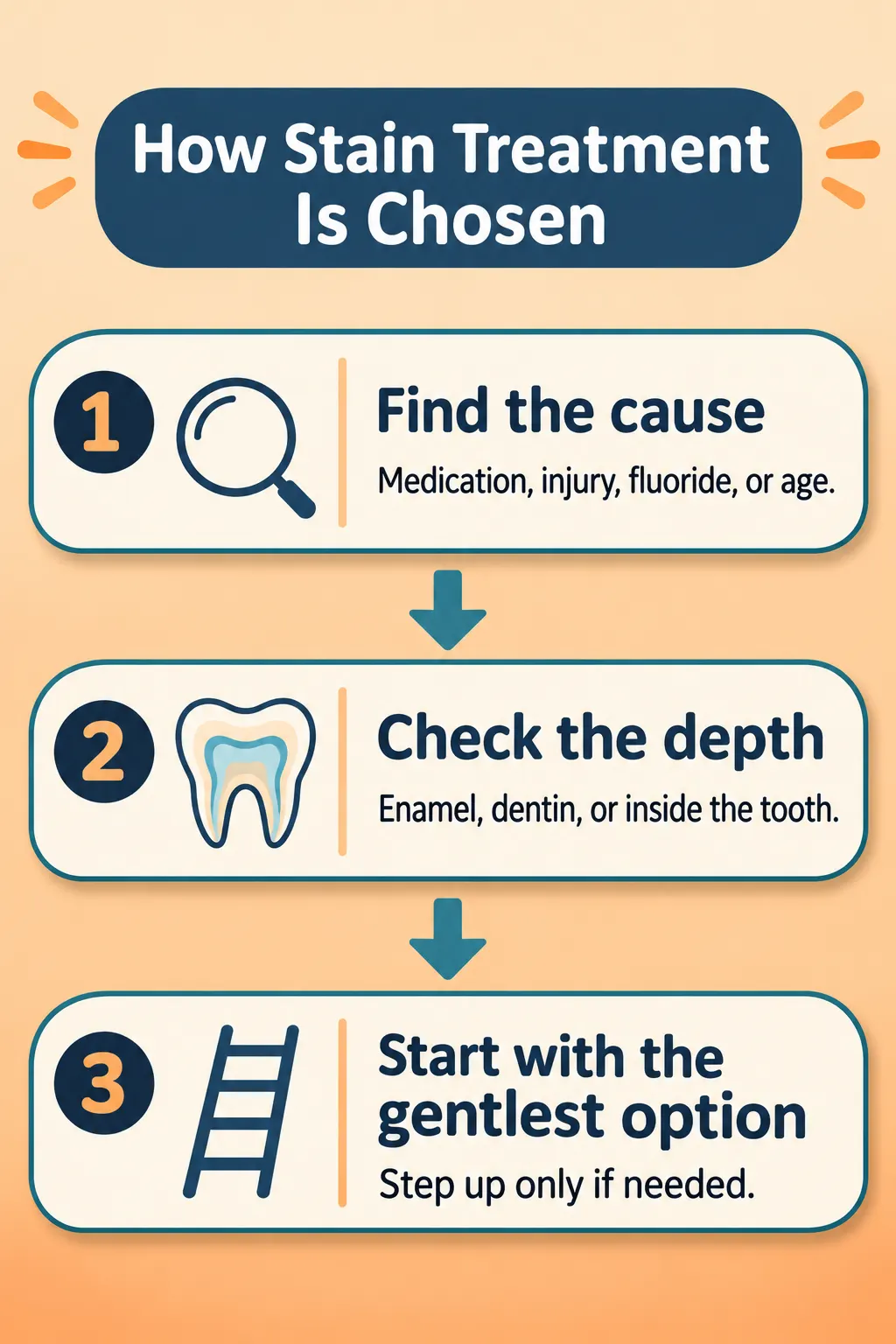
When a gel can’t reach the pigment, the aim changes. Instead of lightening the stain, treatment works to correct it or cover it. Which route fits depends on how deep the stain sits and whether the tooth itself is still strong. How natural the result needs to look matters too.
- Microabrasion: Takes off a very thin layer of surface enamel, which is enough for shallow marks like mild fluorosis. It doesn’t reach stains in the dentin.
- Internal bleaching: Used on a root canal-treated tooth that has darkened. The gel is sealed inside the tooth and works outward, so nothing extra has to be cut away.
- Veneers: A thin porcelain or composite shell is bonded over the front of the tooth, so a stain no gel can shift is simply hidden.
- Crowns: A crown wraps the whole tooth. It’s usually reserved for stained teeth that are also weak or cracked.
Every option is a trade between color change and how much natural tooth is altered. Gentlest first. There’s a broader look at these options under cosmetic dentistry.
Key Takeaways:
Whitening can lighten intrinsic tooth stains a little, but it rarely removes all of the color. Surface stains clear most easily. Deeper stains may need a longer course or internal bleaching. When those fall short, a veneer or crown can cover the tooth. Knowing the stain type before treatment starts avoids a lot of disappointment.
FAQs
Can you get rid of intrinsic stains on teeth?
Many can be lightened, but complete removal isn’t always possible.
Can deep stained teeth be whitened?
Sometimes, with longer treatment, though results vary with the stain’s cause.
How do you clear extrinsic stains from teeth?
Mostly with a professional polish. Regular brushing helps keep them from coming back.
Why do some teeth look yellow even when they’re clean?
Usually thinning enamel, or medication, fluoride, or injury earlier in life.
Disclaimer: This blog is for educational and informational purposes only and should not be considered professional advice.