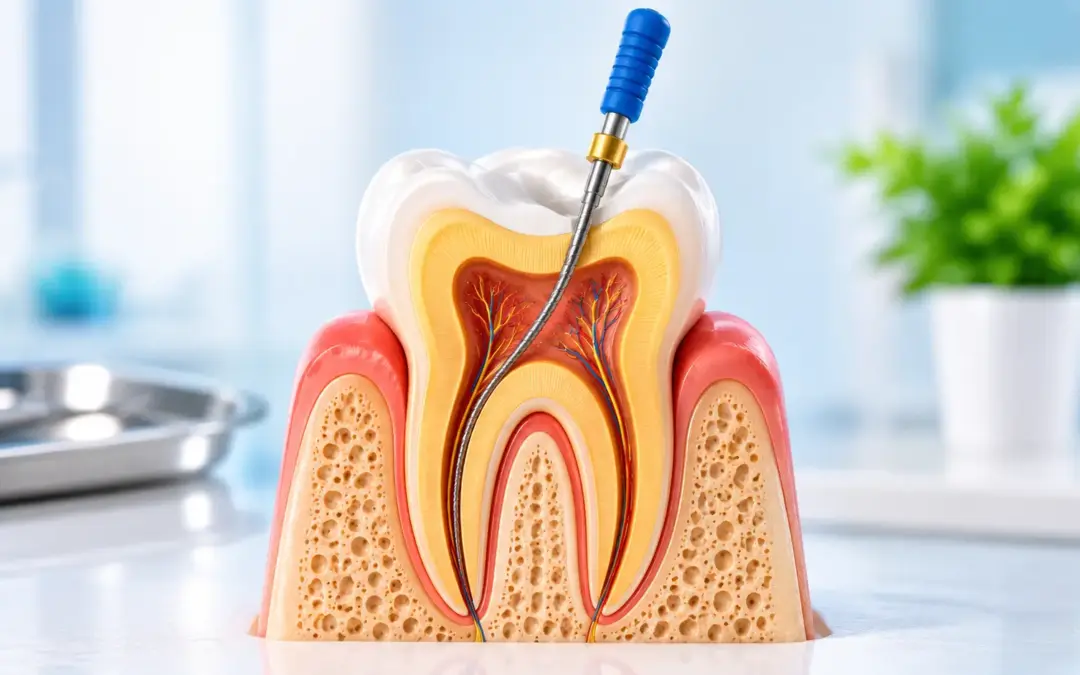
Under the hard outer layers of every tooth sits soft tissue called the pulp, a mix of nerve and blood vessels. When it becomes infected or badly inflamed, the root canal procedure is how a dentist or endodontist deals with it: the damaged tissue is taken out, the empty space is cleaned and disinfected, and then it’s sealed so the pain stops and your own tooth can stay where it is. It sounds dramatic, but most of the work happens in a space narrower than a strand of spaghetti, and the point is simply to save the tooth you already have.
According to Dr. Uttkarsh Shah at The Smile Connect, a Dental Clinic In Kandivali, Mumbai, “People expect a root canal to hurt. But the pain comes from the infected tooth, not the treatment. Once the area is numb, what you feel is mostly pressure and vibration. What matters is removing every trace of infection, because whatever is left behind decides how the tooth does in later years.”
What Happens Step by Step During a Root Canal Procedure?
A tooth looks solid from the outside, so it’s easy to forget there’s a hollow chamber and a few thin canals running down each root. Easy to underestimate. So that’s the space the dentist works in, and the work follows a fairly set order.
- Numbing and access: Local anaesthetic goes in first. The dentist then drills a small opening through the chewing surface to reach the pulp chamber, and a thin rubber sheet keeps the tooth dry and clean.
- Removing the pulp: Very fine files lift out the inflamed or dead tissue from the chamber and from each canal. A molar can have three or four canals, which is why some teeth take longer.
- Cleaning and shaping: The canals are widened slightly and flushed repeatedly with an antibacterial liquid. Files alone can’t reach every nook, so the rinsing does a lot of the disinfecting.
- Filling and sealing: When the canals are clean and dry, they’re packed with a rubbery material called gutta-percha, and the opening is closed with a filling to keep bacteria out.
How many canals a tooth has, and how curved they are, is part of what planning root canal treatment involves.
What Is the Most Painful Part, and What Are the Downsides?
Most people name the numbing injection as the worst bit, and it’s over in seconds. Brief, mostly. Oddly enough, a good number of patients say the tooth hurt more the night before than at any point during the visit.
Stage | What you may feel | How long it lasts |
Numbing injection | A pinch and a short sting | A few seconds |
During the treatment | Pressure and vibration, not sharp pain | Through the appointment |
First day or two after | A dull ache, and the tooth feels tender to bite on | Usually peaks on day one, then eases |
After about a week | Should feel close to normal | Pain beyond this needs a check |
- Time in the chair: Appointments can be long, and holding your mouth open leaves the jaw stiff. Back teeth with several canals usually take the longest.
- A restoration afterwards: The tooth has lost a lot of structure by this stage, so it needs a proper filling or crown. That means another visit and another cost.
- A tooth that can crack: Without a living nerve, the tooth no longer gets its own blood supply and can become more brittle over time. Biting on hard food is where cracks tend to start.
- No warning system: The nerve is gone, so a new cavity under the filling can grow without causing any pain. Regular check-ups matter more, not less.
Soreness that lasts longer than expected is covered in this read on root canal pain.
Is a lingering toothache making you think you may need a root canal?
How Long Will a Tooth Last After a Root Canal?
A treated tooth can last many years, but there’s no single number. A wide range, really. In one large US study of more than 71,000 root-treated teeth, the median survival was about 11 years, and teeth that were crowned lasted noticeably longer than those without a crown, around 13.7 years against 8.4. That study was observational, so it shows an association, not a promise.
- A crown on back teeth: Molars and premolars take the most chewing force. A crown wraps the weakened tooth and spreads that force more evenly.
- A quick permanent seal: A temporary filling can leak, and bacteria then work their way back into the canals. Getting the final restoration placed soon matters.
- Daily cleaning: The tooth can still get decay on its surface and gum disease around it. Brushing twice a day, cleaning between teeth and keeping up with dental visits protects it.
- Hard habits: Chewing ice, opening packets with your teeth, or grinding at night puts a treated tooth at risk. A night guard is worth asking about if you clench.
Why a crown is so often recommended afterwards is covered in this read on a root canal crown.
Key Takeaways:
A root canal removes the damaged pulp, cleans and disinfects the space inside the tooth, and seals it, so the pain stops and the tooth can stay. The numbing injection is usually the sharpest moment, and soreness tends to peak on the first day before easing. A treated tooth can last many years, especially when it’s restored with a crown and cared for well. Pain that lingers past a week should be examined.
FAQs
What is the most painful part of a root canal?
Usually the numbing injection. The rest feels like pressure, not pain.
How long will a tooth survive after a root canal?
Often many years. A crown and good care help it last longer.
What is the disadvantage of a root canal?
It takes time, usually needs a crown, and the tooth may crack more easily.
Is root canal treatment painful?
Not during treatment with numbing. Some soreness afterwards usually fades within days.
Disclaimer: This blog is for educational and informational purposes only and should not be considered professional advice.