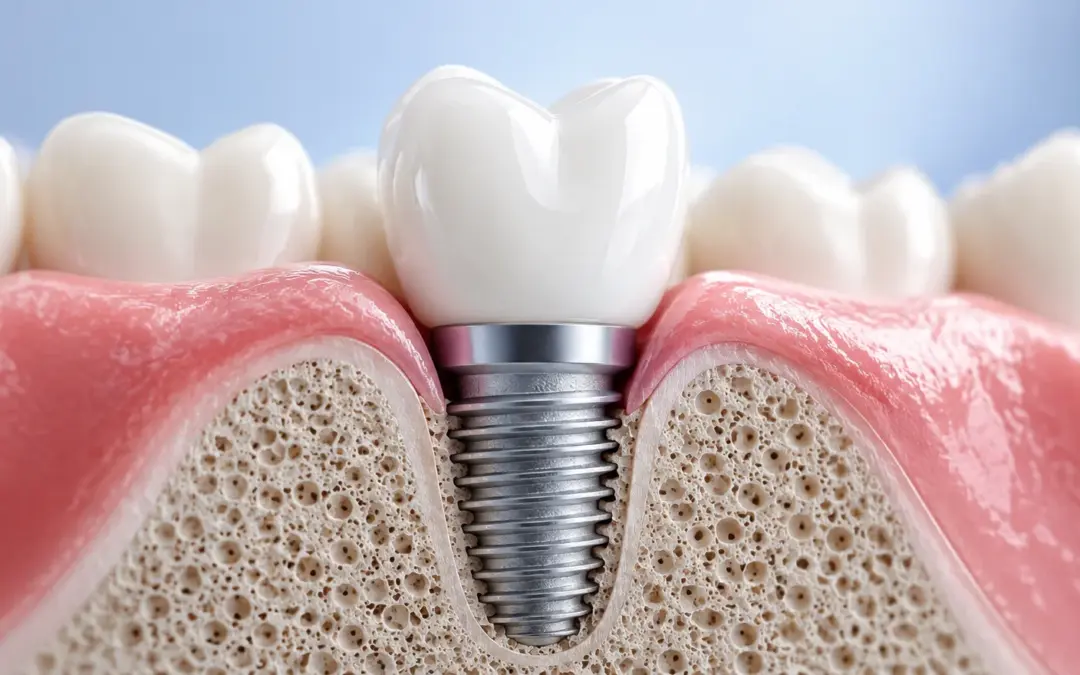
Dental implants hold because the jawbone actually fuses to the titanium post, not because of glue, screws, or friction alone. That fusion, called osseointegration, forms a direct, load-bearing bond between living bone and the implant surface, with no soft tissue sitting in between.
It’s a biological process, not a mechanical one, and it takes weeks to months to complete properly. Rush it, or place an implant where the bone can’t support it, and that bond simply doesn’t form the way it should.
According to Dr. Uttkarsh Shah at The Smile Connect, a Dental Clinic In Kandivali, Mumbai, “People think the implant does the work. It’s really the bone. Once osseointegration in dental implants happens properly, the post is about as stable as a natural tooth root. Skip that healing window and no amount of skill fixes it later.”
What Actually Happens During Osseointegration?
It isn’t instant, and it isn’t just healing in the ordinary sense either.
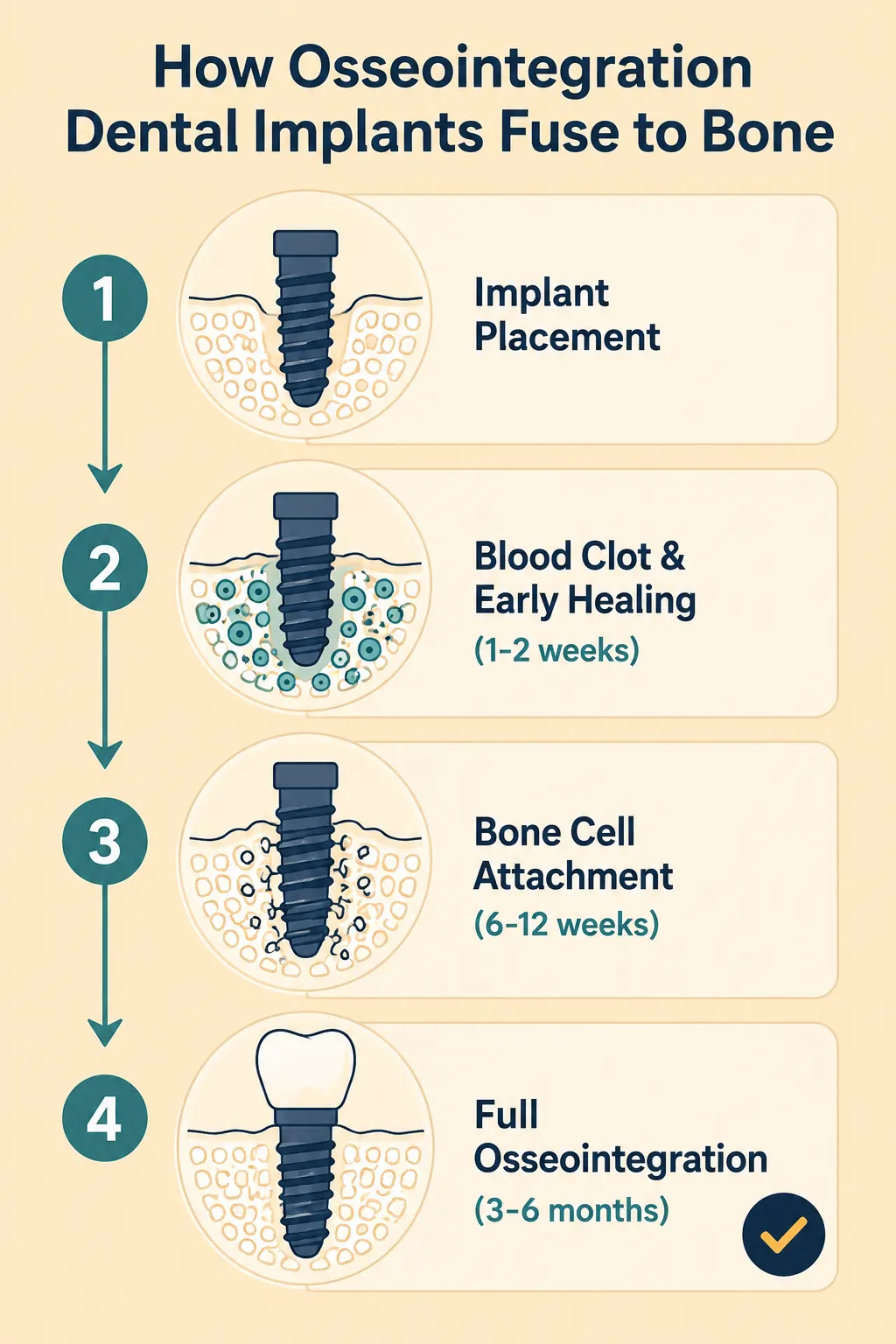
That fusion timeline runs on biology more than technique. Bone cells start reaching the implant surface within days of placement, and over the following weeks, they build new bone directly onto the titanium. How well blood reaches the site and the implant’s surface texture can both speed up the process. The exact number of weeks still varies person to person, since bone density, smoking, and diabetes all change how fast, and how completely, that fusion happens. Rougher, treated implant surfaces tend to integrate faster than older smooth ones, which is why most modern implants aren’t left plain titanium anymore.
Not sure which side of that line you fall on? An orthodontic treatment consultation with digital scans settles it in one visit.
What Factors Decide If Osseointegration Works?
Implants don’t all fuse the same way. A handful of things push the outcome one way or the other, and most of it comes down to biology, not the dentist’s hands.
Bone quality and quantity: Thin or low-density bone gives the implant less to grab onto. That’s usually why grafting comes up before placement even starts.
Implant surface design: Rougher, treated surfaces give bone cells more to latch onto. Older smooth-surface implants took noticeably longer to integrate, if they integrated well at all.
Patient health factors: Diabetes that isn’t controlled, heavy smoking, certain medications, any of these can slow the bone response or stop it from finishing properly.
Loading timing: Placing a crown too early, before the bone’s fully fused, puts pressure on a joint that isn’t ready to bear it.
Healing at an extraction site plays into this too, since a lot of implants go into sockets that need time to settle first. This related read on wisdom tooth extraction covers what that healing window actually looks like.
Curious how long that bone-fusion process actually takes for your case?
Why Choose The Smile Connect Clinic?
Patients choose The Smile Connect when they want their bone density checked properly before an implant plan gets finalised, not estimated by eye. Dr. Uttkarsh Shah, a prosthodontist and implantologist, works alongside Dr. Mansi Shah to review bone volume and density on imaging first, and to time the crown around how healing is actually progressing rather than a fixed date on a calendar. That scan-first approach is what keeps the fusion process on track from the start.
Not sure your jawbone can support an implant right now? A quick scan settles that faster than guessing ever could. Walk-ins work on weekday evenings. Weekends need an appointment. And emergencies get seen the same day, no exceptions.
FAQs
What's the usual timeline for osseointegration?
Around 3 to 6 months, though bone quality and where the implant sits both affect that.
Is it possible for osseointegration to fail later?
Yes. The fusion can break down from infection, smoking, or a crown loaded too early.
Are clear aligners an option for adults too?
Yes, adults actually make up a large share of aligner patients today.
Is bone grafting always needed before an implant?
No. Only when there isn’t enough bone density or volume to support fusion on its own.
References
Disclaimer: This article is for general informational purposes only and does not substitute professional dental advice, diagnosis, or treatment. Please consult a qualified dentist for concerns specific to your condition.