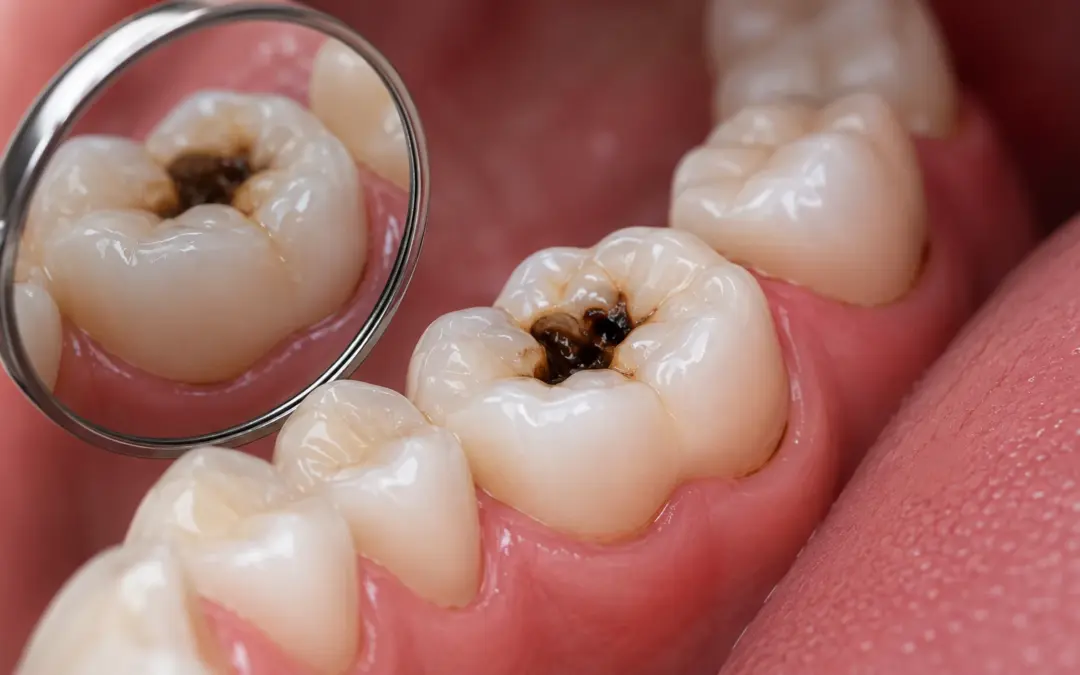
Cavities happen when bacteria in plaque feed on leftover sugars and starches, producing acid that eats through enamel and leaves behind small holes. Poor brushing, constant snacking, sugary diets, these drive most of the damage over time. Genetics, dry mouth, and enamel that’s just naturally weaker can leave some people cavity-prone even with decent habits, and that combination trips up more patients than you’d expect.
According to Dr. Uttkarsh Shah at The Smile Connect, a Dental Clinic In Kandivali, Mumbai, “Cavities usually don’t hurt until they’re already deep, that’s the annoying part. By the time someone actually feels it, decay’s often reached the dentin already, not just sitting on the surface anymore.”
What Causes Cavities?
Cavities don’t show up overnight. They build slowly, and knowing what’s actually driving that process makes prevention a lot less generic.
- Plaque and bacteria sit on teeth pretty much constantly, feeding on sugar residue and giving off acid as a byproduct, and that acid is what wears enamel down over time.
- Frequent snacking. grazing throughout the day keeps the mouth in an acidic state almost nonstop, leaving enamel way less recovery time than three defined meals would allow.
- Sugary, starchy foods feed bacteria more than most people think, sticky snacks and soda being particularly bad since they cling to teeth longer than expected.
- Weak enamel or dry mouth leaves some people prone to cavities no matter how carefully they brush, since saliva does more to neutralize acid than most realize.
Poor brushing technique and skipped checkups let small cavities slide under the radar until they’ve grown considerably larger. A dental cleaning every six months catches early decay well before anything invasive is needed.
How Can Cavities Be Prevented?
None of this is complicated, honestly. It just needs to be consistent instead of occasional.
- Brushing twice daily with fluoride toothpaste clears plaque before it hardens into tartar, and technique matters here almost as much as how often you do it.
- Flossing daily. brushing alone misses the tight gaps between teeth where bacteria collect undisturbed, and floss is really the only thing that reaches in there properly.
- Cutting back on sugar starves bacteria of the fuel they need to make acid in the first place, and that matters more than any particular brushing routine alone.
- Fluoride and sealants, especially useful for kids through pediatric dentistry, add a protective layer right over the molars where cavities tend to start first.
Regular checkups catch cavities while they’re still small enough for a simple filling, a lot less involved than waiting until a root canal’s the only option left. Cavities left untreated too long can end up needing more than a filling ever could fix, something covered in this related read on sensitivity after fillings.
Noticed a dark spot or rough patch on a tooth that wasn’t there before?
Why Choose The Smile Connect Clinic?
Patients choose The Smile Connect when a cavity’s gone unnoticed for a while and they want it caught before it turns into something bigger. Dr. Uttkarsh Shah, a prosthodontist and implantologist, works alongside Dr. Mansi Shah to match fillings to the tooth’s actual shade and shape, and to catch decay early through routine checkups. Cleaning, fillings, and root canal care, all under one roof, so small cavities don’t turn into bigger appointments later.
Noticed a dark spot and been putting off the visit? It’s worth checking before it needs more than a filling. Walk-ins are fine on weekday evenings, weekends run by appointment, and emergency calls get picked up the same day.
FAQs
Can a cavity heal on its own?
No, once enamel breaks down, it needs a filling or other treatment to repair it.
How do I know if I have a cavity?
Dark spots, rough patches, or sensitivity to sweets often signal early decay.
Are cavities more common in kids or adults?
Both, though diet and hygiene habits play a bigger role than age alone.
Does sugar-free gum help prevent cavities?
Yes, it can boost saliva flow, which helps neutralize acid between meals.
Disclaimer: This article is for general informational purposes only and does not substitute professional dental advice, diagnosis, or treatment. Please consult a qualified dentist for concerns specific to your condition.