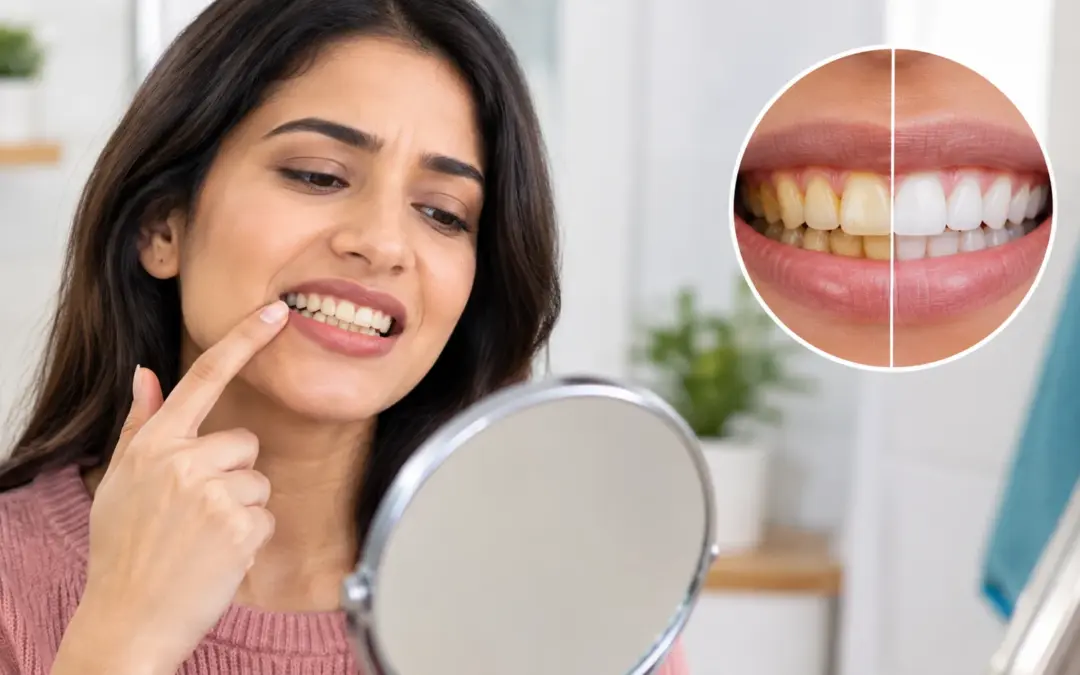
Teeth turn yellow mostly because enamel, the hard white outer layer, thins out over the years and lets the yellowish dentin underneath peek through.
On top of that, pigment from food, drinks, and habits like smoking keeps settling onto the surface, year after year.
So what looks like one issue is really two things happening together. One’s coming from inside the tooth, the other from outside it.
And that split matters. The fix for one doesn’t always touch the other.
According to Dr. Uttkarsh Shah at The Smile Connect, a Dental Clinic In Kandivali, Mumbai, “Patients think yellowing means they’re not brushing well enough. Sometimes, sure. But plenty of teeth yellowing causes come down to enamel naturally thinning with age, nothing to do with hygiene at all.”
What Makes Teeth Yellow in the First Place?
There isn’t one single cause. It usually splits into two categories, and they don’t behave the same way.
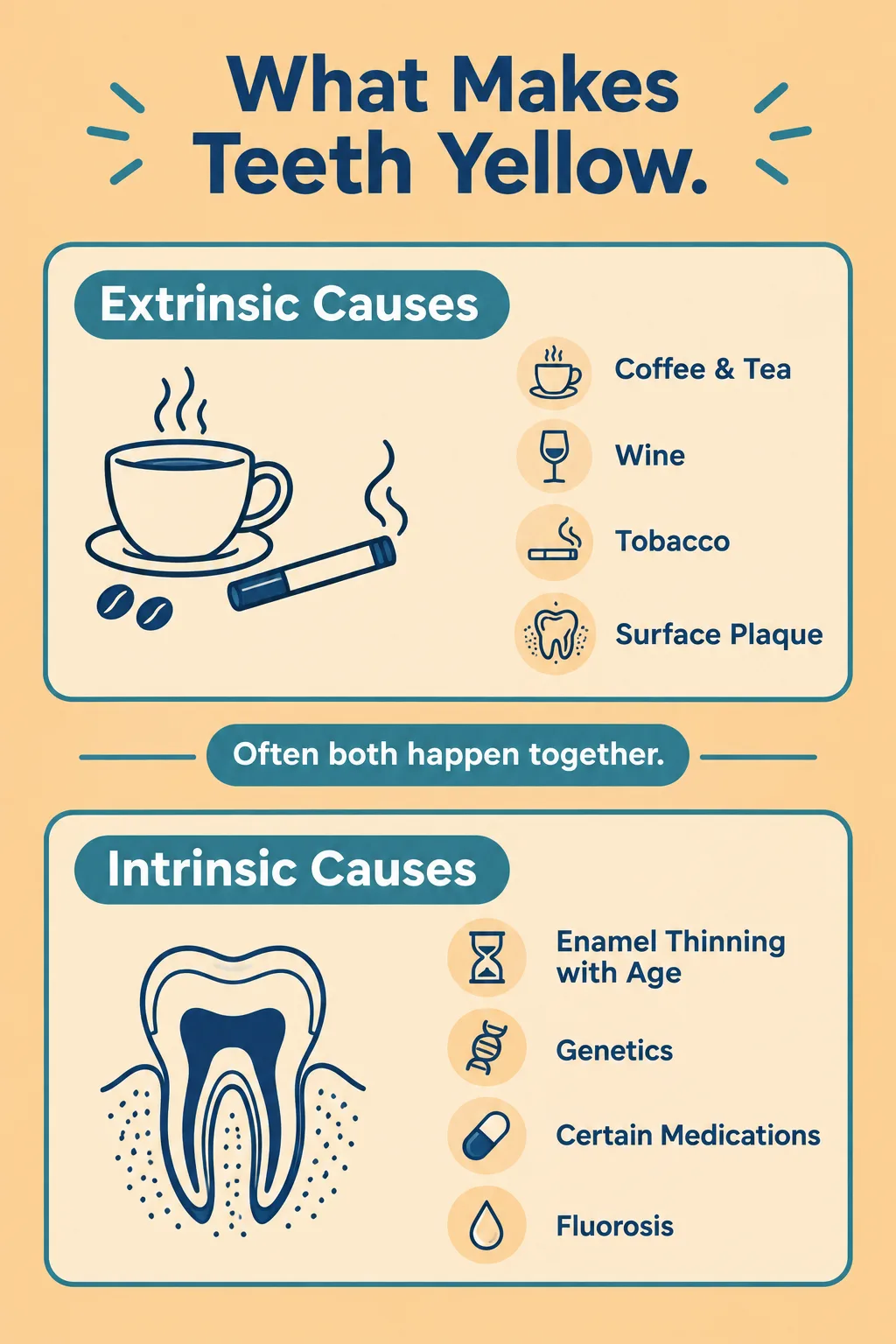
Here’s the part that actually matters: the two types don’t fix the same way. Extrinsic staining sits on the enamel surface, in that thin film that keeps reforming after every cleaning, and it’s usually reversible with the right whitening or cleaning approach. Intrinsic yellowing is different. It starts from inside the tooth, whether that’s enamel thinning naturally with age or dentin changing color from certain medications, and surface treatments alone don’t always reach it. That’s the part most over-the-counter kits quietly skip past, no matter how many weeks someone sticks with them.
Not sure if your yellowing is surface-level or something deeper? A teeth whitening consultation can tell the difference before you spend money guessing.
What Habits Speed Up Teeth Yellowing the Most?
A handful of everyday habits push yellowing along faster than age alone ever would.
Dark drinks and sauces: Coffee, tea, red wine, tomato-based sauces, they all carry pigment that latches onto the surface again and again, every single day.
Smoking and tobacco: Tar and nicotine stain fast. And the color tends to sit deeper than anything a cup of coffee leaves behind.
Skipped cleanings: Miss enough brushing sessions and plaque builds a surface for stain to grip onto, on top of what’s already there.
Aging enamel: Enamel wears thinner over the decades. Thinner enamel means more of that yellow dentin shows through underneath.
Curious how long a whitening treatment actually holds once these habits are managed? This related read on teeth whitening results breaks that down.
Wondering which type of yellowing you’re actually dealing with?
Why Choose The Smile Connect Clinic?
Patients choose The Smile Connect for Dr. Uttkarsh Shah’s ability to tell surface staining apart from deeper, structural yellowing before he even suggests a treatment. An MDS Prosthodontist and Implantologist with over 10 years of experience, he works alongside Dr. Mansi Shah to match the right solution, whitening, cleaning, or something more restorative, to whatever’s actually behind the discoloration. Not a one-size-fits-all whitening package handed out by default.
Wondering why your teeth look duller than they used to, even with decent brushing? Worth a proper look before reaching for another kit. Call +91 80976 18897 to book your consultation.
FAQs
Why do my teeth look yellow even though I brush regularly?
Good habits help, but they can’t stop enamel from thinning with age.
Can whitening fix all types of tooth yellowing?
No, it works well on surface stains but not always on deeper causes.
Does smoking cause faster yellowing than coffee or tea?
Yes, tobacco stains tend to sit deeper and set in quicker.
Is yellowing from enamel thinning reversible?
Not directly, though restorative options can address how it looks.
References
- Present Status and Future Directions: Managing Discoloured Teeth – National Center for Biotechnology Information (PMC): https://pmc.ncbi.nlm.nih.gov/articles/PMC9790475/
- Shades of Decay: The Meanings of Tooth Discoloration and Deterioration – National Center for Biotechnology Information (PMC): https://pmc.ncbi.nlm.nih.gov/articles/PMC4537173/
Disclaimer: This article is for general informational purposes only and does not substitute professional dental advice.