
A little sensitivity for a few days after a filling is completely normal, but when the same tooth is still bothering you six weeks later, something is off. By this point the tooth should feel like it did before, or even better. If it still reacts sharply to cold water, hot chai, or a bite of something sweet, your body is telling you the tooth needs another look. The good news is that most of these cases are easy to fix once your dentist figures out the cause.
According to Dr. Uttkarsh Shah, an experienced Dentist in Kandivali,
“Sensitivity that hangs around after six weeks is almost never something patients should just live with, and in most cases a small adjustment or a quick check is enough to solve it.”
Common causes of tooth sensitivity 6 weeks after filling
If your tooth is still sensitive six weeks in, one of a few things is usually going on. Most of them are minor and easy to correct. Only a small number of cases point to something bigger, and even those can be handled without much trouble once found early.
Here are the most common reasons your tooth might still be feeling sensitive:
- The filling sitting slightly higher than the other teeth, which puts extra pressure on it when you bite
- A small gap between the filling and the tooth that lets hot or cold reach the inside
- Irritation of the nerve inside the tooth after a deep filling, which sometimes takes a while to settle
- A tiny crack in the tooth or in the filling itself that you cannot see or feel
- The nerve being closer to the filling than usual, making it more reactive
- Grinding or clenching at night, which puts extra stress on the filled tooth
- Gums pulling back around the tooth, exposing the sensitive area near the root
Dr. Mansi Jajal Shah, who handles patient follow-up at The Smile Connect, a Dental Clinic In Kandivali, Mumbai, often tells patients that six weeks is the point where a check-up stops being optional. Once your dentist knows exactly what is triggering the sensitivity, the fix is usually a small adjustment, a fresh filling, or something equally quick.
Symptoms that may indicate a more serious problem
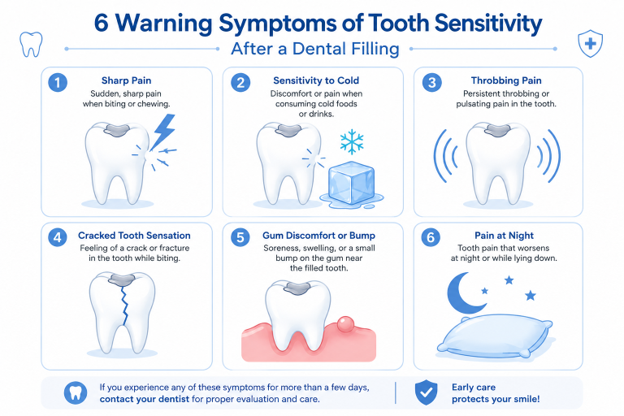
Some sensitivity is annoying but harmless. Other symptoms are your tooth’s way of asking for real help. Knowing the difference helps you decide whether to wait a few more days or head straight to your dentist.
Watch out for any of the following signs:
- Sharp pain the moment you bite down that goes away as soon as you stop
- Pain that lingers for minutes after eating or drinking something cold or hot
- A dull, throbbing ache that keeps coming back on its own
- Sensitivity that has slowly gotten worse instead of better
- A visible chip, crack, or dark line on the filled tooth
- Swelling or a small bump near the gum around the tooth
- Bad taste or smell coming from that side of the mouth
- Pain that wakes you up at night
These signs usually mean the issue has moved past a simple adjustment and needs proper attention. A dental filling that is causing these problems six weeks later is not one you should wait out. The earlier your dentist sees it, the more likely they can save the tooth without a bigger procedure.
Can persistent sensitivity be prevented after a filling?
The honest answer is yes, most of the time. A lot of long-lasting sensitivity comes down to small habits and simple aftercare that patients are not always told about. If you know what to do in the weeks after a filling, you seriously reduce your chances of dealing with this six weeks later.
Here are simple habits that make a real difference:
- Use a soft-bristled toothbrush and brush gently, not aggressively
- Switch to a toothpaste made for sensitive teeth for the first few weeks
- Skip very hot, very cold, or very sweet food and drinks for the first week
- Chew from the other side of the mouth for a few days after the filling
- Do not bite hard things like ice, pen caps, or hard sweets on the filled tooth
- Get a night guard if you know you grind or clench your teeth at night
- Floss carefully around the filled tooth, without snapping the floss down
- Book a follow-up visit if the tooth feels off within the first two weeks
Keeping up with regular dental cleaning visits also helps a lot, because a clean mouth heals better and reacts less. Small habits like these are usually the difference between a filling that settles quickly and one that keeps giving you trouble weeks later.
When should you revisit your dentist?
If your tooth is still sensitive six weeks after a filling, you have already given it more than enough time to settle on its own. That is the point where waiting stops helping and starts making things worse. A quick visit at this stage usually solves the problem in one appointment, while ignoring it can turn a small issue into a much bigger one.
Book a visit if any of these apply to you:
- The sensitivity has not improved at all in the past two weeks
- The pain has been getting stronger instead of fading
- You cannot chew comfortably on the filled tooth
- You are avoiding cold water, ice cream, or hot drinks because of the pain
- You notice swelling, a bump on the gum, or a bad taste near the tooth
- The filling feels rough, high, or different from your other teeth
- The pain wakes you up at night or does not go away on its own
At The Smile Connect, Dr. Uttkarsh Shah and Dr. Mansi Jajal Shah check the filling, take a quick X-ray if needed, and figure out exactly what is causing the problem. Most of the time the fix is quick, painless, and done in a single sitting. If a bigger issue is found, they walk you through the treatment in plain language, without any pressure to decide right away.
Not sure if your filling needs attention? Schedule a consultation and get an honest answer without any pressure.
FAQs
Is tooth sensitivity normal 6 weeks after a filling?
No, sensitivity that far out is not normal and usually means the filling or the tooth needs a small correction.
What does it mean if my filling is still sensitive after a month?
It usually means the filling is slightly high, the nerve is still irritated, or a small gap has formed, and a dentist can fix it quickly.
Should I get my filling redone if it stays sensitive?
Not always. Many cases only need a small adjustment, and only some need a fresh filling once the dentist checks it.
Can a filling cause nerve damage weeks later?
In rare cases, yes. If the filling was deep and the nerve stays irritated for too long, you may need further treatment, so it is best to get it checked early.
How long does normal filling sensitivity last?
Normal sensitivity usually goes away within 2 to 4 weeks. Anything lasting longer than that is worth a check-up.