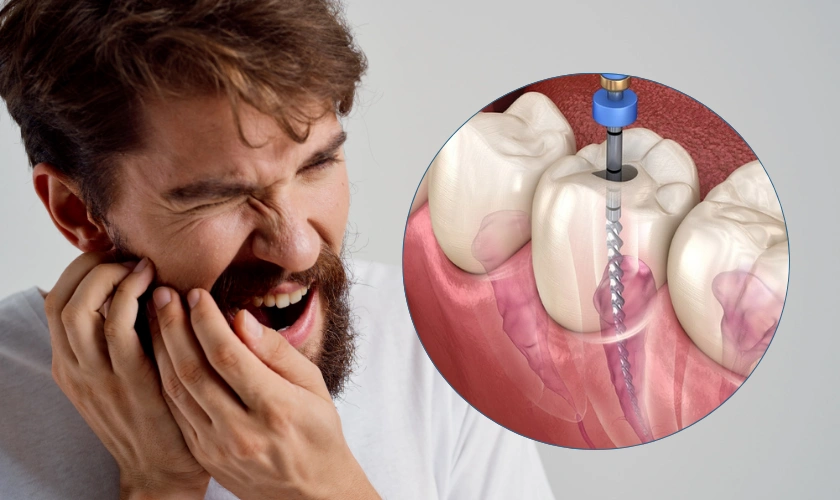
Dental crowns are often used to safeguard and restore a tooth after a root canal procedure. Although root canal therapy eliminates bacteria from the tooth pulp, it renders the tooth susceptible to additional damage. A crown serves as a layer of protection, giving the tooth strength it may have lost, thus allowing it to cope with the forces of chewing and lowering the risk of damage in the future. Even though the procedure itself will usually go smoothly and with minimum discomfort, the patient may experience pain and sensitivity after getting it.
According to Dr. Uttkarsh Shah, an experienced Dentist in Kandivali,
“A root canal-treated tooth should gradually become comfortable after a crown is placed. If pain persists beyond the initial healing period or starts affecting your daily activities, it is important to identify the cause early, as most problems can be treated more easily before they become serious.”
Ongoing pain after a root canal crown should not be ignored. A dental examination can identify the cause and help protect your treated tooth.
What Causes Dental Crown Pain After a Root Canal?
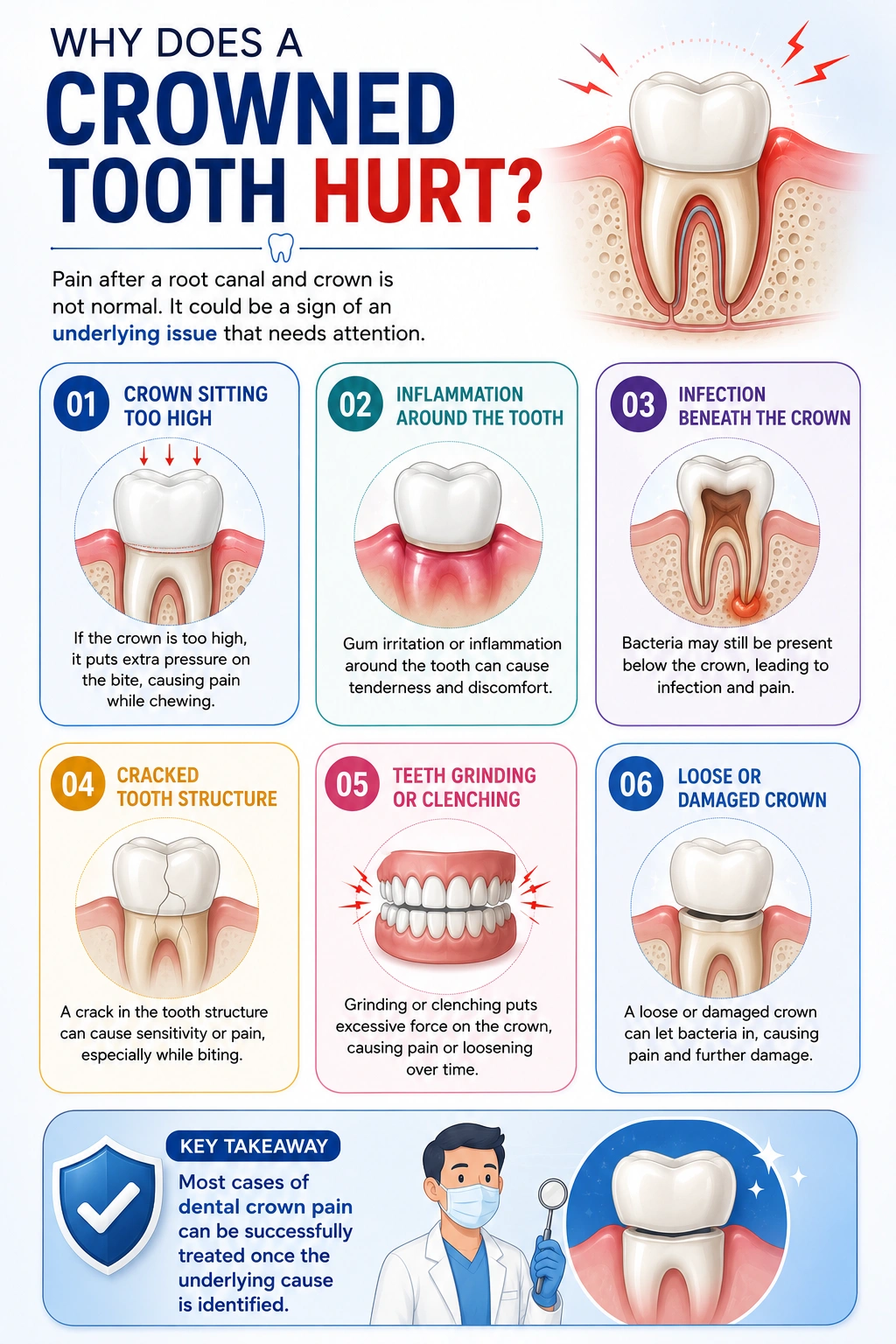
Pain after a root canal and crown placement can occur for several reasons. Some causes are temporary and relatively minor, while others may require additional treatment.
One of the most common causes of crown pain is a bite imbalance, where the crown sits slightly higher than the surrounding teeth and puts extra pressure on the tooth while chewing. Mild inflammation during healing is also common and usually settles on its own.
In some cases, infection beneath the crown or a hidden crack in the tooth can cause ongoing discomfort. Teeth grinding or clenching may also place excessive force on the treated tooth, leading to pain even after a successful root canal.
Since root canal-treated teeth are naturally weaker, proper restoration and aftercare play an important role in preventing future complications.
Symptoms That May Indicate an Underlying Problem
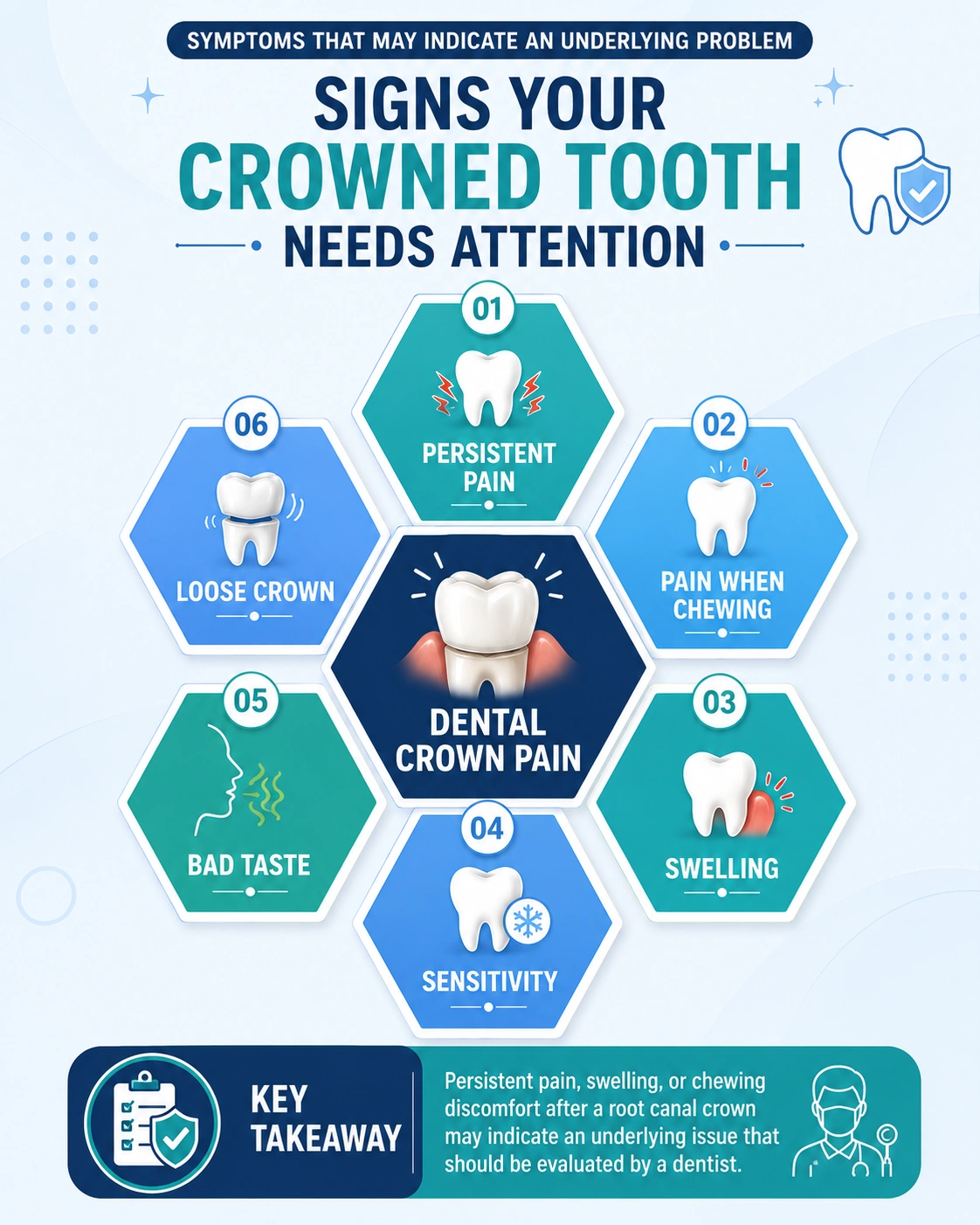
Key Takeaway: Persistent or worsening symptoms should always be assessed by a dentist.
A little sensitivity immediately after treatment is usually expected. However, pain that continues for several weeks is not considered normal and should be examined.
Pain while biting down is often a sign that the crown’s bite needs adjustment. Swelling around the gums or cheek may indicate inflammation or infection. Patients experiencing facial swelling after root canal treatment should not wait for symptoms to worsen before seeking care.
You should also pay attention to symptoms such as a recurring gum boil, discharge around the tooth, or a persistent bad taste in the mouth. These signs can indicate the presence of bacteria beneath the crown or around the root.
How Is Dental Crown Pain Diagnosed and Treated?
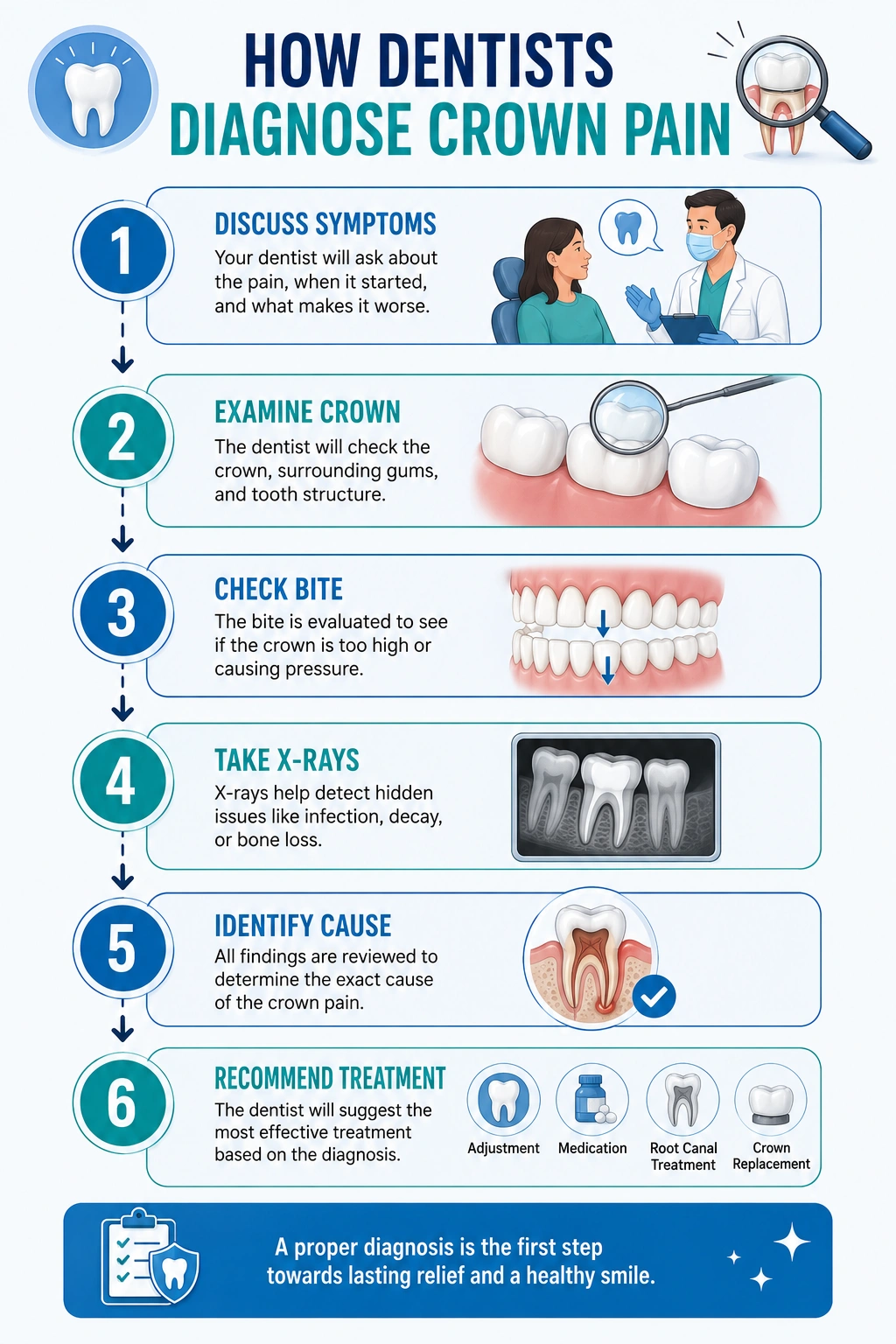
The first step in treating dental crown pain is identifying the exact cause. Since several different factors can create similar symptoms, a thorough examination is essential.
Your dentist will begin by discussing your symptoms and examining the crown and surrounding tissues. The bite will be checked to determine whether excessive pressure is being placed on the tooth during chewing.
Dental X-rays may be taken to evaluate the tooth roots, supporting bone, and any signs of infection beneath the crown. These images help identify hidden problems that may not be visible during a routine examination.
Treatment depends on the underlying cause and may include:
- Adjusting the crown if the bite is uneven
- Managing gum inflammation
- Replacing a damaged crown
- Treating an infection
- Wearing a night guard for teeth grinding
- Root canal retreatment in selected cases
Many patients experience significant relief from relatively simple corrections, such as a bite adjustment. More complex cases, such as persistent infection, may require additional procedures to fully resolve the issue.
The primary goal is always to preserve the natural tooth whenever possible and restore comfortable chewing function.
When Should You Visit a Dentist?
While mild sensitivity for a few days after crown placement can be normal, certain symptoms should never be ignored. Early evaluation can help prevent complications and improve the chances of saving the tooth.
You should schedule a dental appointment if you experience:
- Pain that persists beyond a few days and shows no signs of improvement
- Sharp pain when chewing or biting down
- Swelling around the tooth, gums, or cheek
- A loose, damaged, or chipped crown
- Sensitivity that continues to worsen over time
- A bad taste in the mouth or discharge near the treated tooth
- Recurrent gum boils or pus formation around the affected area
- Fever or other signs of infection
Experiencing pain after a root canal crown? Book a dental consultation at The Smile Connect to identify the cause and protect your treated tooth before the problem becomes more serious.
FAQs
Is it expected to feel pain after putting a crown on a tooth that has undergone a root canal?
Some sensitivity or discomfort after treatment may be normal, however, the patient should speak to the dentist if he/she is suffering from lasting pain.
How much time does sensitivity last after placing a crown on a tooth that has had a root canal treatment?
Most people report that mild sensitivity has it’s peak after some days, but if symptoms don’t improve after this time, the dentist should be consulted.
Is reinfection possible after root canal treatment and fitting of the crown?
Yes, although the success rates of root canal are high, bacteria can invade the tooth in some cases after the treatment.
What should I do if I am experiencing pain when biting?
Pain when biting can mean many things, among which are the bite problems related to the root’s inflammation or too much pressure on the tooth. The dentist can find out the real reason.
Is it possible for a loose crown to hurt?
Yes. Loose crown may lead to infiltration of food debris and bacteria under it causing pain.