
A root canal works by clearing out the infected pulp sitting at its core, not by pulling the tooth itself. Once that infected tissue’s gone, the space gets cleaned, shaped, and sealed so bacteria can’t sneak back in. The outer structure, the part actually doing the biting and chewing, stays in place throughout the procedure. So the tooth keeps working. It just does it without the nerve that was causing trouble in the first place.
According to Dr. Uttkarsh Shah at The Smile Connect, a Dental Clinic In Kandivali, Mumbai, “People hear root canal and think the tooth’s basically done for. It’s not. We’re taking out what’s infected, not the tooth. Clean it, seal it properly, and that tooth can go on for decades.”
How Does Root Canal Treatment Work Step by Step?
A root canal isn’t one single step. It’s a sequence, and each step helps clear the infection and prevent it from coming back.
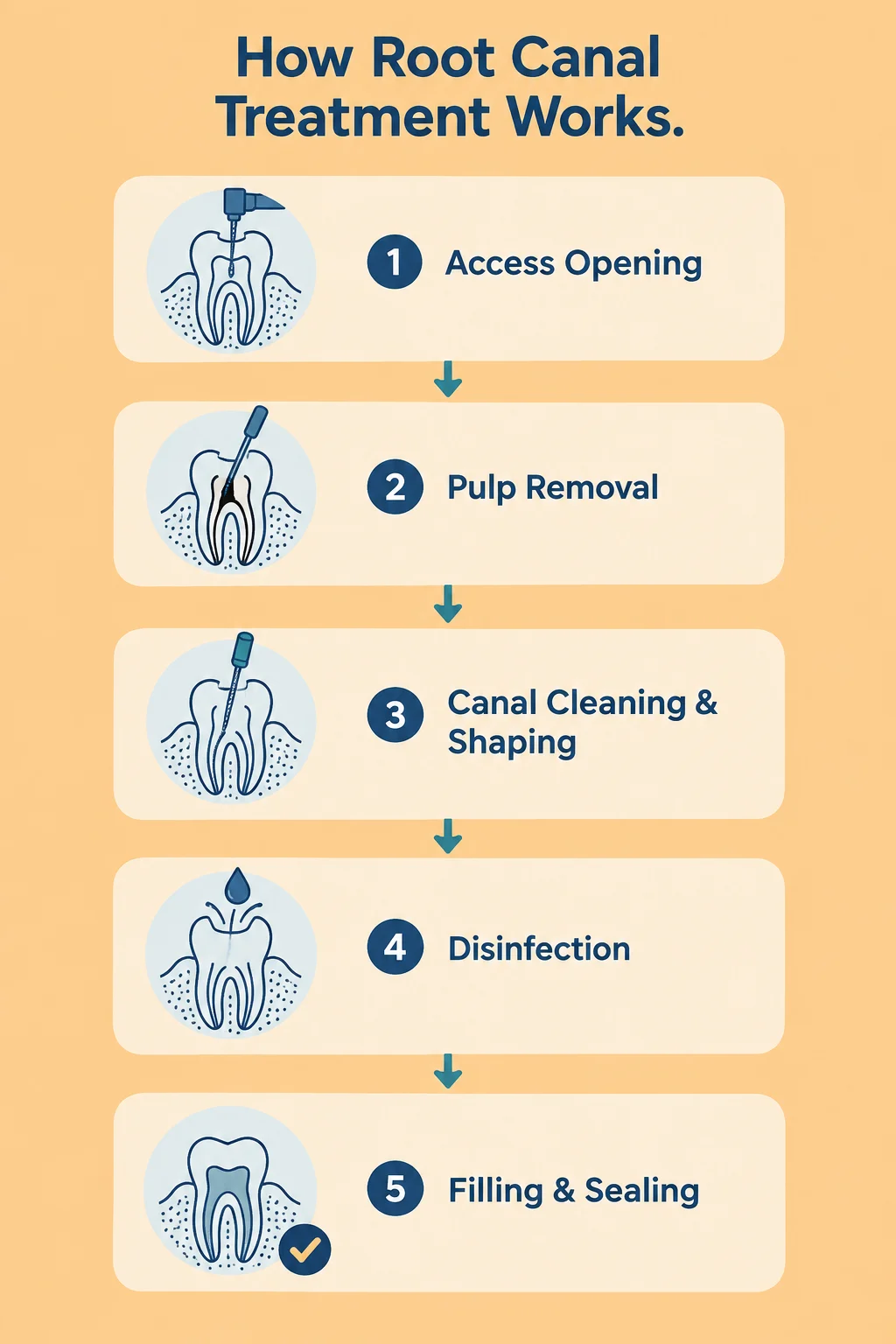
What actually makes root canal treatment work isn’t any single step on its own. It’s how each step helps stop bacteria from getting back in. The access opening gives a direct path to the infection without cutting into healthy tooth structure. Cleaning and shaping clears out the infected tissue. And the final seal? That part matters more than people think. A poorly sealed canal is one of the most common reasons a treated tooth gets reinfected years down the line. Get it right, and the tooth’s sturdy enough to handle normal biting force again, same as before.
Wondering if your case can be completed in a single sitting or will need multiple visits? A root canal treatment evaluation settles that before anything starts.
Why Is Saving the Tooth Better Than Extracting It?
The tooth isn’t pulled without reason. Keeping it does more for the mouth long term than most people realize.
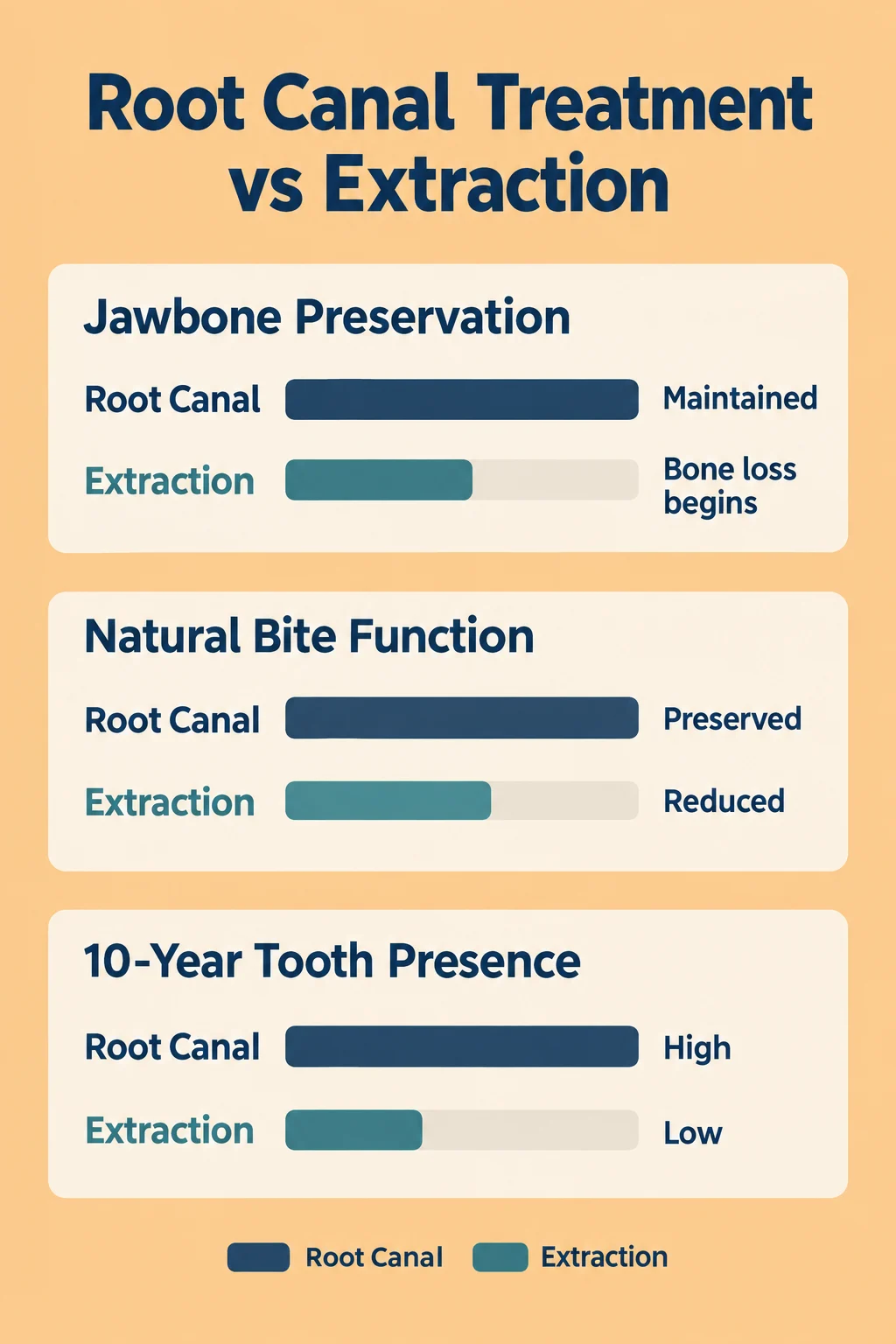
- Jawbone preservation: Extraction sets off bone loss in that area within months. A treated tooth keeps the jawbone loaded exactly the way it always was.
- Bite function: The tooth stays right where it was, doing what it always did. No gap means no change in how you chew.
- Neighboring teeth: Pull one tooth and the ones beside it can start drifting into that space over time. Keep it, and that drift never begins.
- Long-term cost: An implant or bridge down the road costs more, and takes longer to heal, than restoring the tooth you already have.
Once a tooth’s treated, restoring it properly matters just as much as the procedure itself. This related read on crown after root canal covers why that final step can’t be skipped.
Curious what actually happens once the procedure starts?
Why Choose The Smile Connect Clinic?
Patients choose The Smile Connect for Dr. Uttkarsh Shah’s precision with root canal cases. He is an MDS Prosthodontist and Implantologist, with over 10 years in practice, including reinfected canals and cases other clinics found hard to locate. He works alongside Dr. Mansi Shah to map canal anatomy using digital imaging before starting, which cuts down missed canals, the most common reason root canals fail later. Cleaning, sealing, and restoration all get handled by the same team, so nothing about the tooth’s long-term survival is left to guesswork.
Been putting off a root canal because you’re scared it’ll hurt or fail? That’s understandable, but modern technique’s mostly made that outdated. Call +91 80976 18897 to book your consultation.
FAQs
Does a root canal take out the whole tooth?
No, just the infected pulp inside comes out. The tooth stays.
How many sittings does a root canal usually need?
One or two visits, generally, depending on how bad the infection is.
Does it hurt more than getting a regular filling?
Not really. Modern anesthesia keeps the area numb, so you feel no pain.
Does getting several implants at once change the recovery timeline?
It protects the jawbone, the bite, and the teeth next to it.
References
Disclaimer: This article is for general informational purposes only and does not substitute professional dental advice, diagnosis, or treatment. Please consult a qualified dentist for concerns specific to your condition.