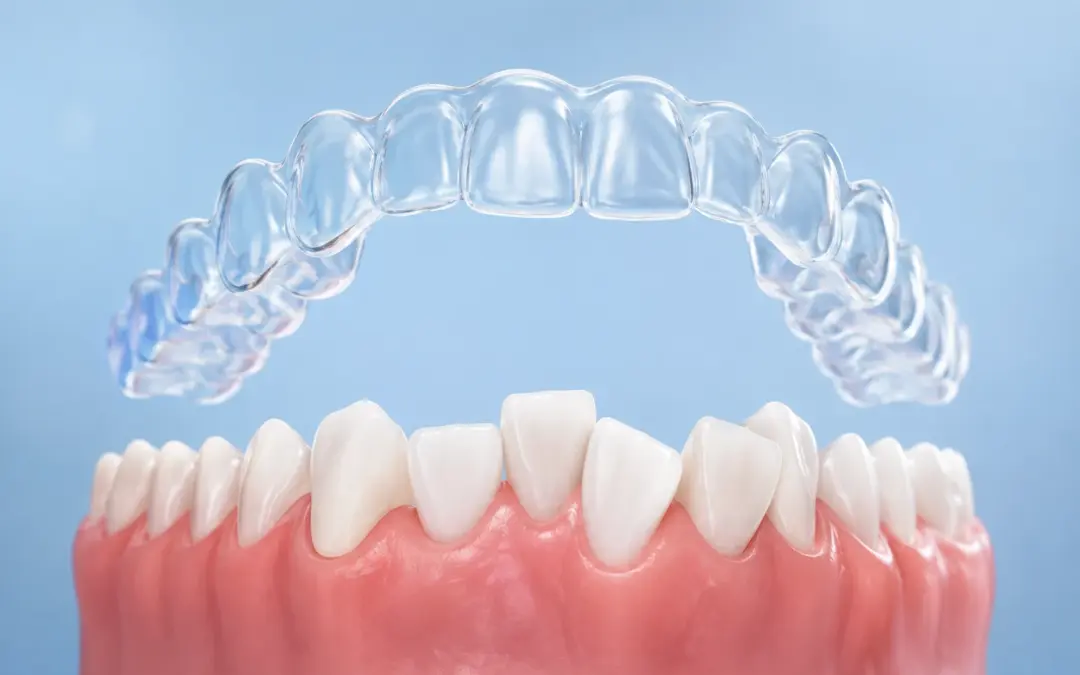
Clear aligners work well for teeth that are mildly to moderately crowded, gapped, or slightly rotated, without the metal look of braces. They shift teeth using a series of custom, removable trays instead of brackets and wires. The catch is discipline. Results depend on wearing them close to full time, not just when it’s convenient. For bite problems or severe crowding, braces still tend to get there faster.
According to Dr. Uttkarsh Shah at The Smile Connect, a Dental Clinic In Kandivali, Mumbai, “Not every crooked tooth needs trays. Mild crowding, a few rotated front teeth, small gaps, these respond well. Once it’s a bite issue or crowding past a few millimetres, braces usually get the job done more predictably.
Are Clear Aligners Right for Every Case of Crooked Teeth?
Not really. Whether trays work depends almost entirely on how much crowding there is to begin with.
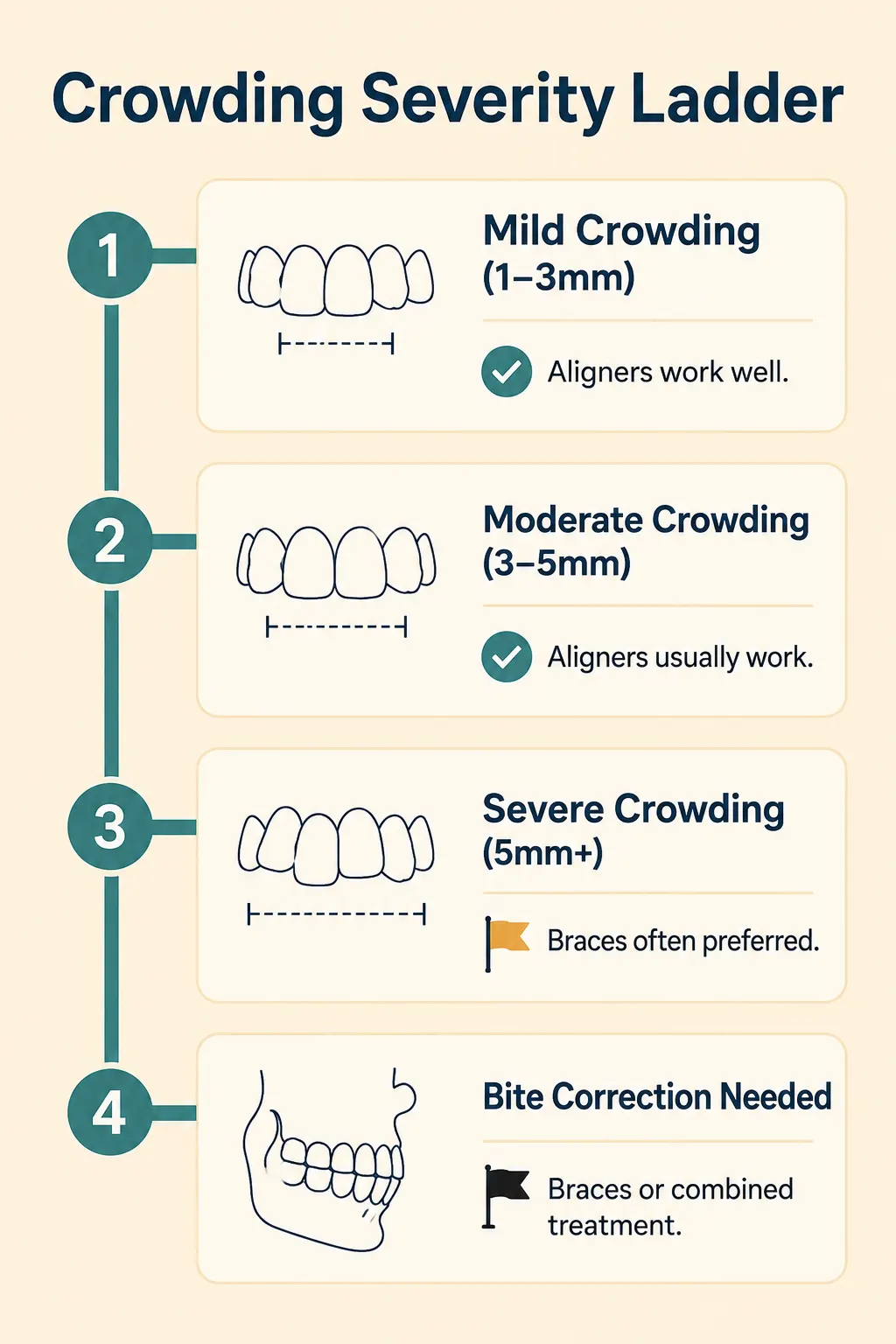
That severity scale isn’t just marketing talk, it’s clinical. Aligners handle crowding and spacing in the smaller range comfortably, along with mild rotations and deep bites that need light correction. Once teeth are rotated more than about 20 degrees, or a tooth’s tipped well out of the arch, trays start losing their grip and predictability drops fast. Same goes for cases needing real jaw correction rather than just tooth movement. So it isn’t really an aligner versus braces question at the start. It’s a “how much correction does this actually need” question, and that only gets answered with scans and a proper look inside the mouth.
Not sure which side of that line you fall on? An orthodontic treatment consultation with digital scans settles it in one visit.
How Do Clear Aligners Compare to Traditional Braces?
Both move teeth. But they get there differently, and that difference matters depending on your case and your patience for maintenance.
Visibility: Aligners are nearly invisible in photos and conversation. Braces, even ceramic ones, are still noticeable up close.
Comfort: No brackets means no cut cheeks or wire pokes. Aligners do cause pressure for a day or two after each new tray, though.
Maintenance: Aligners come out for eating and brushing, so nothing changes about your diet. Braces mean careful cleaning around brackets for months, sometimes years.
Discipline required: This is where aligners can fail quietly. Skip wear time and the plan slips. Braces don’t give you that option, they’re just there, working regardless of what you do.
Discoloration rather than alignment is the bigger worry for some patients. If that’s you, this related read on tooth bonding covers a separate, quicker fix.
Curious whether your case falls in the mild-to-moderate range?
Why Choose The Smile Connect Clinic?
Patients choose The Smile Connect when they want their crowding actually measured before deciding between trays and braces, not guessed at across the counter. Dr. Uttkarsh Shah, a prosthodontist and implantologist, works alongside Dr. Mansi Shah to review digital scans first, so aligners only get recommended when the case genuinely fits. Metal braces, ceramic braces, clear aligners, and retention care are all available under one roof, which makes switching plans straightforward if the scans point that way.
Wondering if your teeth are too crowded for trays? That’s exactly what the first scan is for. Walk-ins are fine on weekday evenings, weekends run by appointment, and emergency calls get picked up the same day.
FAQs
Will clear aligners fix any kind of crooked teeth?
Not always, they work best for mild to moderate crowding, gaps, and rotations.
How long does aligner treatment usually take?
Mild cases often finish in 6 to 9 months, complex ones longer.
Do clear aligners hurt more than braces?
No, aligners cause less irritation, though new trays bring pressure for a day or two.
Are clear aligners an option for adults too?
Yes, adults actually make up a large share of aligner patients today.
Disclaimer: This article is for general informational purposes only and does not substitute professional dental advice, diagnosis, or treatment. Please consult a qualified dentist for concerns specific to your condition.