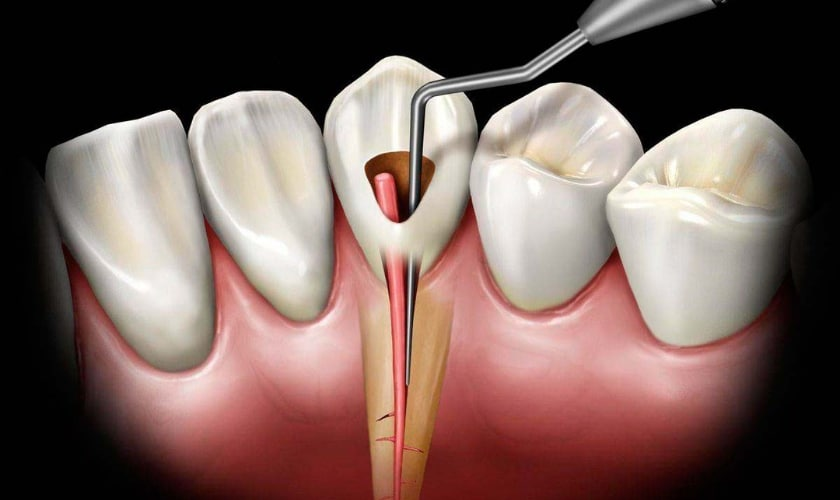
Pain in a tooth a year after a root canal is not normal and usually means something needs attention. A successful root canal should feel like a regular tooth, with no pain or pressure during daily use. When pain comes back months or years later, it often points to a hidden infection, a small crack in the tooth, or a missed canal during the original treatment. The good news is that most of these cases can be treated and the tooth saved with the right diagnosis.
According to Dr. Uttkarsh Shah, an experienced Dentist in Kandivali,
“Patients who develop pain in a previously root canal-treated tooth often delay treatment thinking the discomfort will go away on its own, but early diagnosis almost always leads to a simpler outcome.”
Signs That Root Canal Pain May Indicate a Serious Problem
Some mild sensitivity in a root canal-treated tooth can happen in the first few weeks after the procedure, but pain that appears a year later is different and should not be ignored. It usually means that something inside or around the tooth has changed, and the longer you wait, the more involved the treatment can become.
Warning signs that point to a real problem:
- Constant dull ache: Pain that does not go away with regular painkillers
- Sharp pain on biting: Sudden pain when chewing or pressing on the tooth
- Sensitivity to hot or cold: Discomfort that lingers long after the food or drink is gone
- Swelling near the tooth: Puffiness in the gum or cheek close to the treated tooth
- A small pimple-like bump on the gum: Often a sign of an underlying infection
- Bad taste or smell: Coming from the area of the treated tooth
- Loose feeling in the tooth: The tooth feels slightly mobile or unstable
- Darkening of the tooth: A change in colour compared to nearby teeth
If you notice any of these signs, it is best to see a dentist soon rather than wait it out. Dr. Mansi Jajal Shah, who handles patient follow-up at The Smile Connect, a Dental Clinic in Kandivali, often reassures patients that even old root canal cases can be treated successfully, and the earlier the issue is found, the simpler the treatment usually is
How Dentists Diagnose the Cause of Root Canal Pain
Diagnosing the cause of pain in a previously root canal-treated tooth is a careful step-by-step process, and most cases are figured out in a single visit. The goal is to find exactly why the pain has come back, because the right treatment depends fully on the right diagnosis. A good dentist never starts treatment without knowing the actual cause.
What the diagnosis usually involves:
- A detailed history: Questions about when the pain started, what triggers it, and how long it lasts
- A clinical examination: Checking the tooth, gums, and surrounding area for any visible signs
- Bite and pressure tests: To see if the pain comes from biting or tapping the tooth
- Hot and cold tests: To check how the tooth responds to temperature
- Digital X-rays: To look for hidden infection, missed canals, or bone changes near the root
- 3D CBCT scan if needed: A detailed scan used in complex cases to see things a regular X-ray cannot
- A check on nearby teeth: Sometimes pain comes from a different tooth and feels like it is in the treated one
Common causes the diagnosis usually points to:
- A new infection inside the tooth
- A missed canal during the original root canal
- A small crack or fracture in the tooth
- An issue with the crown or filling on top of the tooth
- Gum infection near the treated tooth root
- Sinus pressure for upper back teeth
A clear diagnosis is what separates a quick, simple treatment from a long, complicated one, which is why this step is never rushed. Once the cause is identified, the dentist explains it in plain language and shares the treatment options with the patient.
Still experiencing pain in a root canal-treated tooth? Book a consultation today for an accurate diagnosis and the right treatment plan.
How do you treat an old Root Canal Infection Years Later?
Patients chooseThe Smile Connect to finish what a root canal starts, the crown included. Dr. Uttkarsh Shah and Dr. Mansi Shah have restored treated teeth for over a decade, matching the cap to your bite so nothing sits high. Canals, crowns, and the fit between them, all handled in one place. With digital scans and modern ceramics, the crown bonds clean and blends with the teeth around it.
Had a root canal elsewhere and never went back for the crown? Bring it in before it cracks. A capped tooth lasts years. An uncapped one is on borrowed time. Walk-ins are fine on weekday evenings, weekends run by appointment, and emergency calls get picked up the same day.
Worried that your old root canal might be failing? Schedule a consultation at The Smile Connect and find out the best way to save your tooth.
FAQs
Is it normal to have pain a year after a root canal?
No, pain a year after a root canal is not normal and usually means there is a new infection, a hidden crack, or an issue with the crown.
Can an old root canal get infected again?
Yes, an old root canal can get infected again if bacteria enter through a leaking filling, a cracked tooth, or a worn-out crown.
Can a failed root canal be redone?
Yes, a failed root canal can often be redone through a procedure called retreatment, which has a high success rate when done early.
Will I lose the tooth if the root canal is failing?
Not in most cases, as retreatment or a small root tip surgery can save the tooth, and extraction is usually the last option.
How can I prevent root canal pain in the future?
You can prevent it by maintaining good oral hygiene, avoiding hard foods on treated teeth, and visiting your dentist every 6 months.